

There’s a hopeful idea doing the rounds: as council budgets tighten, other funders including philanthropy and private donors might step in to fund culture. Last year Ben Stephenson, Emma Wilcox and I had a wide-open brief to develop a new Cultural Investment Model for Bristol City Council to test this, and I had a hunch where we’d end up. What I didn’t expect was the nuance – that “flexibility” pulls in two directions at once.
The first pull is the council’s. Public money is unusually flexible for a place: tax and business-rate income can be directed year on year, according to local strategy and the impact you want to create, with very little overhead. Private funding rarely flexes that way — it comes with strings, shaped by the donor’s priorities rather than the council’s, and can’t be redirected as easily. To attract it, you often have to house a fund outside the council, which adds cost.
The second pull runs the other way. Bring philanthropy in, and the flexibility has to come from the sector’s side: working with donors is relationship-building, and it means leaving them room to fund the solution alongside you, not to a fixed brief. So the real choice is between two kinds of flexibility — a place’s freedom to direct public money toward its own strategy, or the sector’s willingness to flex around what donors want to back.
The real choice is between two kinds of flexibility.
Put plainly, the alternatives couldn’t replace what council investment does, so the case for keeping the programme held — and it stayed, with thanks to sustained advocacy from the sector and the guidance of Elise Hurcombe and the culture team at Bristol City Council.
The lesson I keep coming back to: “let philanthropy fill the gap” isn’t simply cheaper or dearer — it changes who controls the money. Public funding lets a place direct impact toward its own strategy; private funding asks the sector to flex around the donor.
Both have their place, but they aren’t interchangeable — and culture often loses the argument not on merit, but because no one has weighed that trade-off. Much of what I do is make it explicit, and turn “we value this” into a model a finance director can sign off.
Facing this where you are?
If your council, BID or cultural organisation is trying to defend cultural investment — or weighing up philanthropy as part of the mix — I’d be glad to think it through with you. Just book a 30-minute call and we’ll find the time.
Liked this? I send Ideas for Night and Day once a quarter — practical notes on culture, place and the night-time economy. Subscribe here.
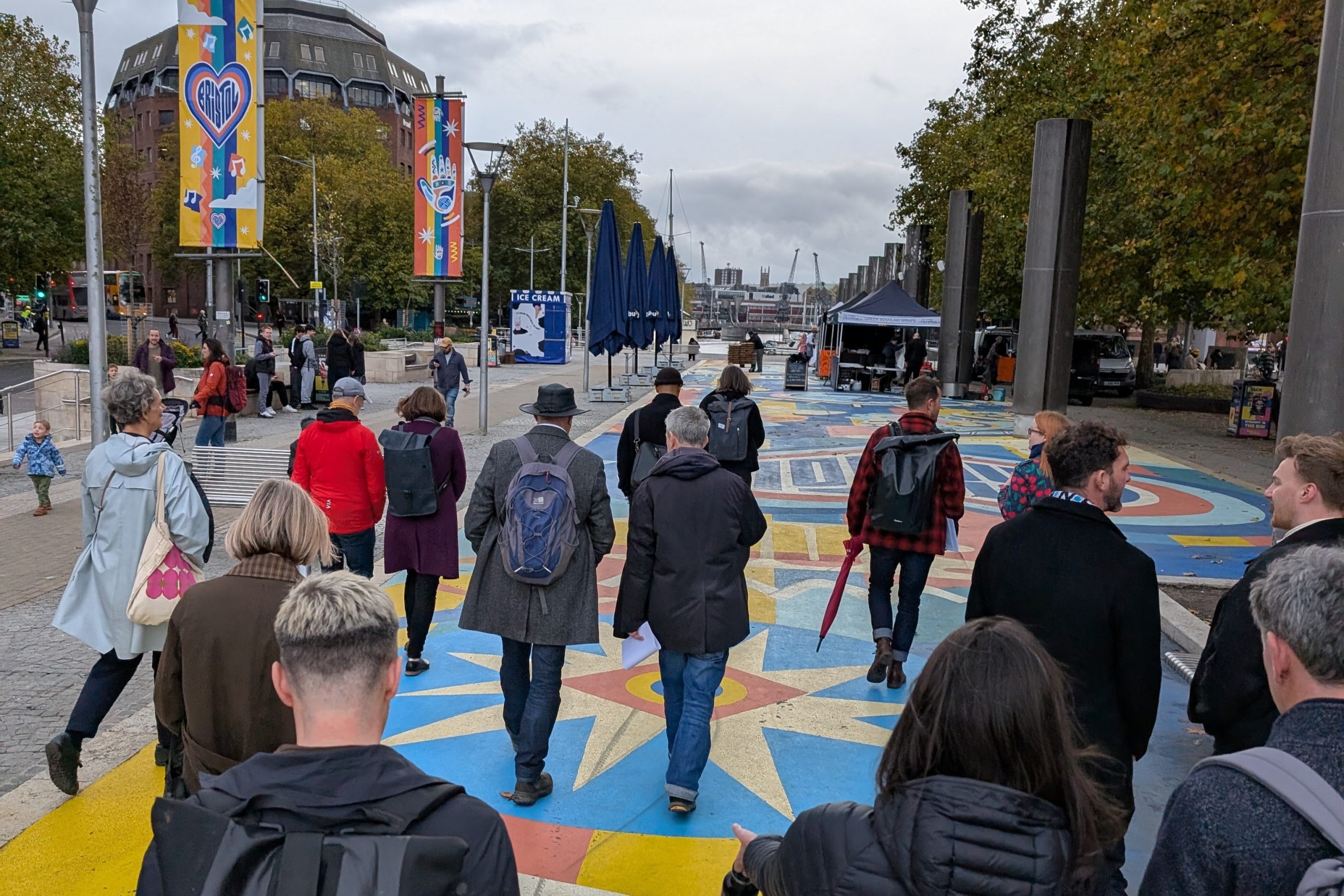
Image: Place Collective UK visit to Bristol, October 2025